
Olbia Pro
Tech Stack
Next.js, TypeScript, Node.js, WebSockets, React, Express, viem/wagmi, SQLite, Tailwind CSS, Turborepo, OpenSea API, Vercel
Links
About
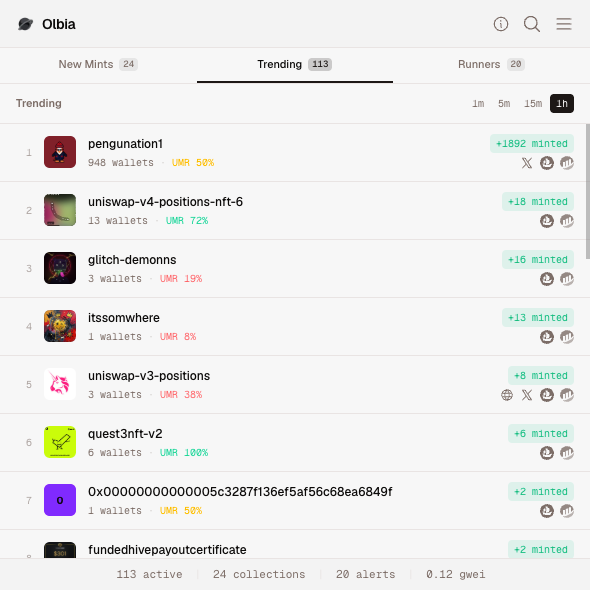
Olbia is a production-grade NFT intelligence dashboard built for on-chain collectors who need to spot momentum before it hits social feeds. The product ingests live mint events from OpenSea’s streaming API, filters noise with a Unique Minter Ratio (UMR) algorithm, and surfaces collections crossing configurable velocity thresholds, all within seconds of on-chain activity.
Dashboard
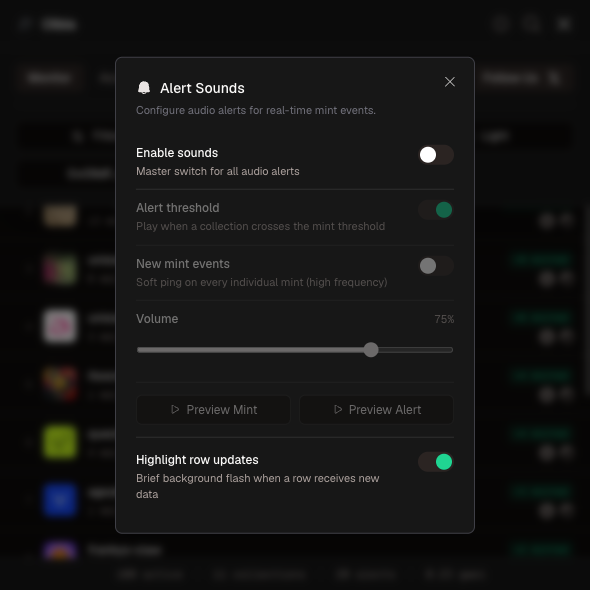
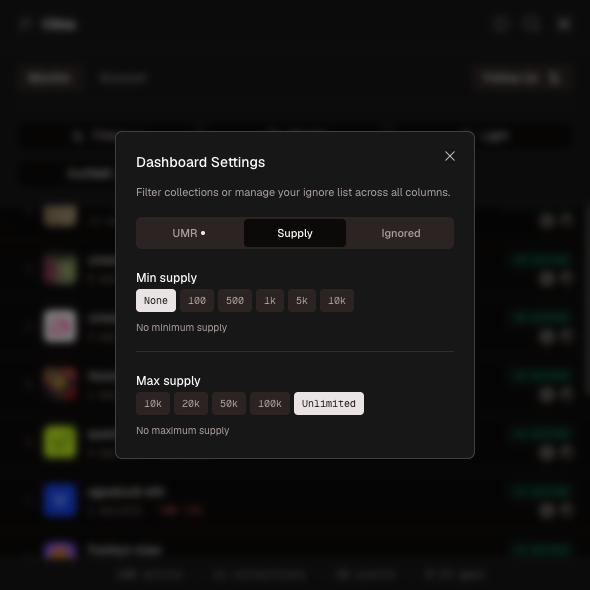
The user-facing dashboard is a Next.js 16 app deployed on Vercel at olbia.pro. It presents a three-column layout (New Mints, Trending, and Runners) with real-time WebSocket updates, mobile tab navigation, search, supply filters, collection ignore lists, configurable sound alerts, and a live gas price readout. Access is gated behind Cloudflare Turnstile, which issues short-lived HMAC WebSocket tokens so the monitor backend can reject unauthorised connections.
Monitor Service
The core monitor service (“Global Mint Radar”) runs as a long-lived Node.js process on a VPS, managed via systemd and exposed through nginx with TLS at ws.olbia.pro. It subscribes to OpenSea transfer events, applies the null-address mint filter, tracks per-collection rolling windows of mint activity, and fires runner alerts when volume crosses a base threshold and then grows by a configurable factor. Server-side filters suppress low-UMR collections, unverified contracts (via Etherscan), and optionally free mints.
Webhook Service
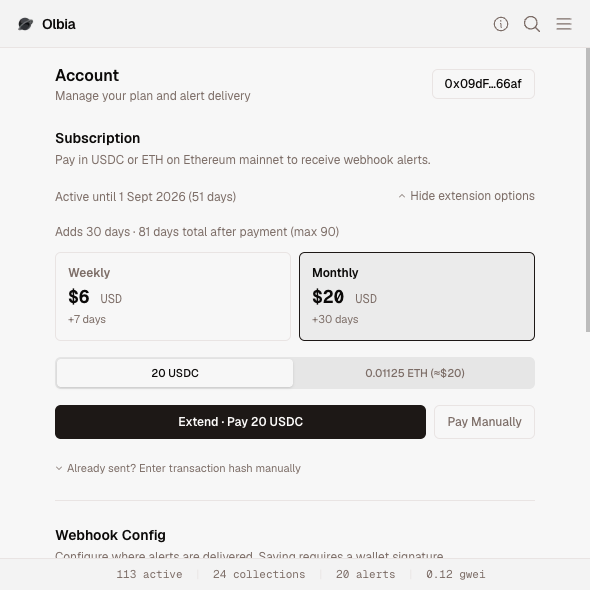
Beyond the free dashboard, a webhook service at api.olbia.pro provides a monetised alert layer. Users connect a wallet, pay weekly or monthly subscriptions in USDC or ETH (verified on-chain via Alchemy), and configure personal Discord webhooks with per-user UMR thresholds and trending/runner notification preferences. Subscriptions are stored in SQLite with stacked expiry logic and outbound dispatch cooldowns.
Admin & Tooling
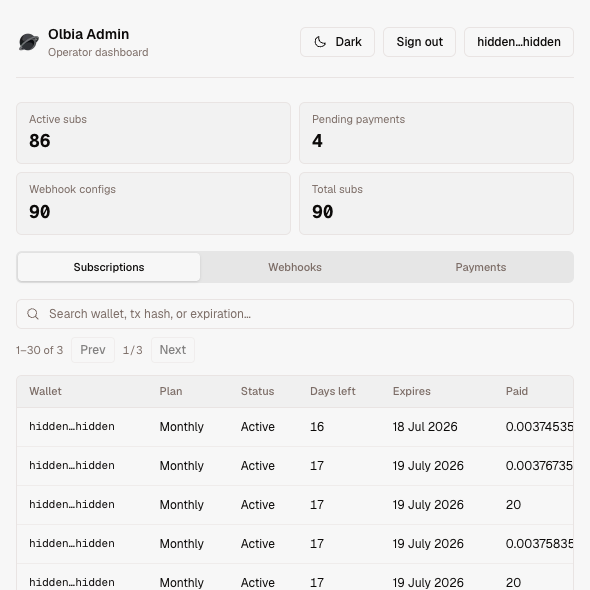
An operator admin stack (admin.olbia.pro on Vercel plus a wallet-gated admin API) gives allowlisted operators read-only visibility into subscriptions, payments, and webhook configurations. The monorepo also includes experimental tooling: a rarity sniper that watches OpenSea listings near floor price with OpenRarity rank filtering, and a trait scanner that probes IPFS metadata for specific trait matches at floor-premium thresholds.
Architecture
The architecture is deliberately split: static UI on Vercel’s edge, stateful real-time services on a dedicated VPS, and shared secrets (WS_SECRET, service bearer tokens) tying the layers together. The project demonstrates end-to-end systems design: streaming data ingestion, real-time broadcast, bot-resistant auth, on-chain payment verification, and a polished collector-focused UI built with React 19, Zustand, shadcn/ui, and wagmi.